Amazon Rewrote Its Dev Playbook: Why Your Team Is Next
GeekWire dropped a report that stopped every engineering manager in Seattle in their tracks: Amazon is actively rewriting its internal software engineering playbook for an era where AI writes the code.
Think about that for a second. For over twenty-five years, Amazon's engineering culture has been the holy scripture of backend engineering. Service-oriented architecture? Codified by the famous 2002 Bezos API Mandate. Autonomous micro-teams? Amazon gave us the Two-Pizza Team. Relentless operational discipline? Amazon invented Operational Excellence reviews, the Bar Raiser interview process, strict P99 latency tracking, and the PR/FAQ document.
If you've built distributed systems at any meaningful scale over the past two decades, you've lived inside the wake of Amazon's operational philosophy. Now, they're tearing out the pages and starting over. Why? Because generative AI didn't just give engineers a faster keyboard. It broke the fundamental assumptions behind how distributed software is designed, reviewed, and deployed.
Typing code was never the bottleneck in software engineering. Never. Understanding systems was. By flooding complex microservice environments with millions of lines of synthetic code, AI coding assistants turned our traditional software pipelines into a cognitive disaster area. Here is my raw architectural analysis of why Amazon had to torch its old playbook, what the new engineering lifecycle looks like, and why your team is about to face the exact same reckoning.
The Math Behind Andy Jassy's 4,500 Developer-Years
Let's address the headline number that kicked off this corporate frenzy. Amazon CEO Andy Jassy publicly stated that deploying Amazon Q to upgrade internal Java applications saved the company 4,500 developer-years of work. Wall Street swooned. Non-technical leadership across the industry immediately began asking their engineering directors why headcount hadn't been slashed in half.
I had to laugh when I read that memo. Upgrading legacy enterprise applications from Java 8 to Java 17 or 21 is a tedious, mechanical chore. It's essentially find-and-replace on an industrial scale: updating deprecated packages, adjusting dependency injection annotations, bumping build configurations, and fixing unit test syntax. That is deterministic labor. An AST-aware LLM with a massive context window can breeze through boilerplate refactoring because the underlying business logic, state machines, and system boundaries remain completely untouched.
That isn't distributed systems engineering. That's glorified syntax janitorial work.
The moment you take those same autonomous agents and task them with building something net-new—say, an event-driven payment reconciliation service that guarantees idempotent writes across DynamoDB and external payment gateways while maintaining a sub-40-millisecond P99 latency SLA—the illusion shatters. When you unleash AI coding assistants without a new operational model, you trade a two-hour implementation phase for a fourteen-hour distributed debugging nightmare.
The Synthetic Code Crisis: Drowning in Pull Requests
Here is the quiet reality that dev-tool marketing teams never put on their landing pages: generative code creates compounding comprehension debt. In the classic playbook, code was expensive to write and cheap to review. An engineer spent two full days thinking through edge cases, debating database indexes, diagramming message queues, and deliberately crafting 300 lines of Go or TypeScript.
Because human typing speed was slow, the engineer was forced to think before committing. When the pull request landed on GitHub, a senior engineer or Principal Architect could review those 300 lines in fifteen minutes. The reviewer understood the intent, flagged a subtle concurrency bug, and signed off.
Today, that dynamic has completely inverted. Code is free to generate, but exponentially more expensive to verify.
A developer types a prompt into Claude Code, Cursor, or Amazon Q Developer. Thirty seconds later, the model outputs 1,200 lines of pristine-looking, beautifully indented code. It compiles cleanly. It includes twenty passing unit tests. It looks immaculate on the surface. Then it lands on my desk for review—and that's where the architectural rot begins.
An LLM does not make human mistakes. Human mistakes are predictable: an off-by-one loop index, an unhandled HTTP 504 error, or a missing null check. We know what to scan for during code reviews. AI models make sociopathic mistakes. They invent subtle assumptions that violate distributed systems invariants.
They instantiate unbounded in-memory caches inside stateless containers that silently exhaust heap memory under high concurrency. They generate N+1 query patterns wrapped inside async promises that choke your relational database connection pools during traffic spikes. They silently wrap critical distributed transactions in generic try-catch blocks that swallow transient network retries and mask split-brain conditions.
Running this platform on Dev Dominion gives me a front-row seat to how infrastructure costs shift when agentic workloads spike—and what Amazon is doing internally mirrors what every serious platform engineering team is wrestling with right now.
Senior engineers and Bar Raisers at Amazon were rapidly drowning in review queues. Pull request turnaround times stretched. Senior staff became human rubber stamps, clicking 'Approve' out of sheer mental fatigue, only to fight firestorms in production days later. Amazon realized that their traditional PR-centric workflow was officially broken.
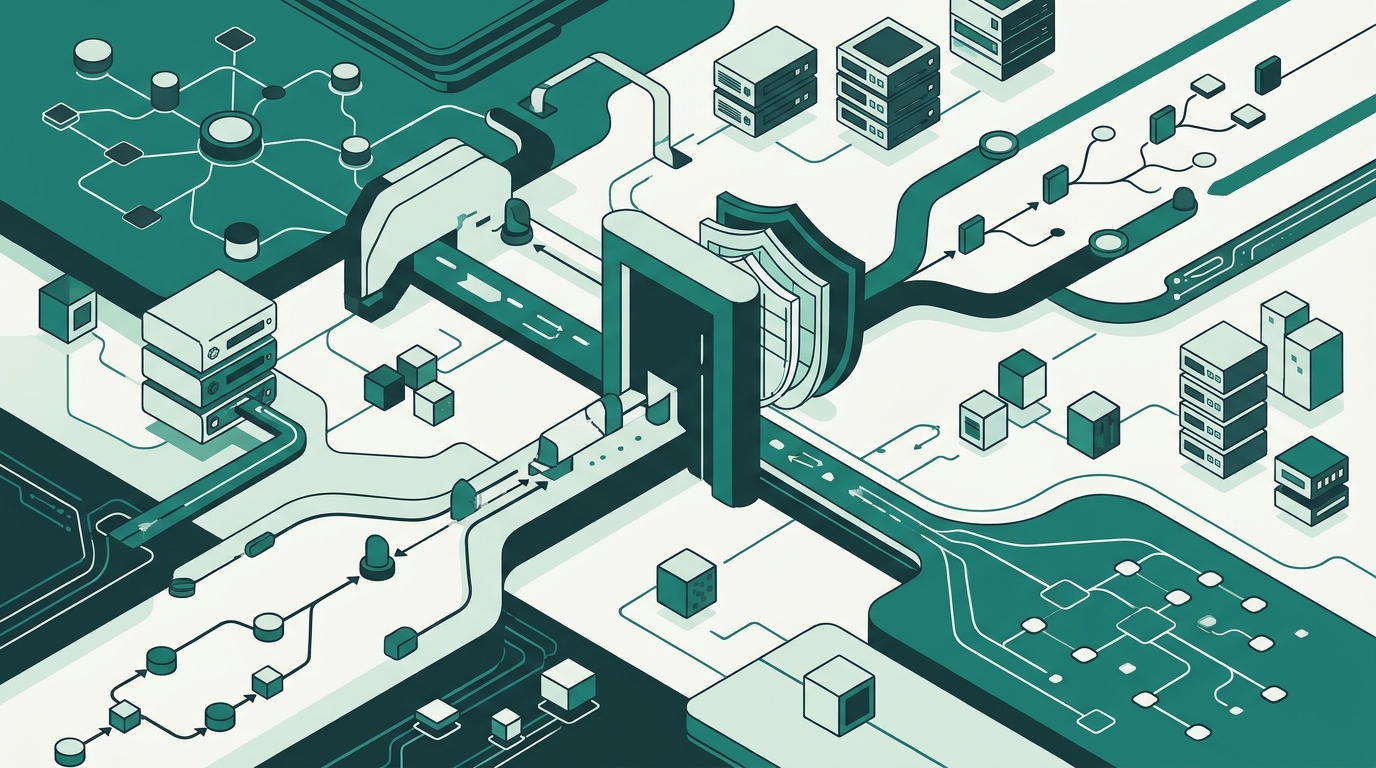
Pillar 1: Contract-First Architecture and Schema Hardening
How is Amazon actually fixing this? The first structural pillar of their new playbook is an absolute commitment to contract-first architecture. In the older agile paradigm, teams moved fast with loosely typed JSON APIs. You stood up a basic backend service, iterated quickly, and cleaned up interface mismatches in staging environments.
In an AI-first engineering world, loose contracts are fatal. If you give an autonomous agent free rein over data shapes, it will happily hallucinate polymorphic payloads that corrupt downstream event consumers. Amazon's updated playbook doubles down on strict interface definition languages—specifically Amazon Smithy, Protocol Buffers, and strictly validated OpenAPI schemas.
Before an agent or an engineer writes a single line of backend application logic, the interface contract must be formally defined, cryptographically validated, and registered in an internal schema registry. The rule is simple: the AI agent is explicitly sandboxed from modifying the schema. The contract is immutable. The agent's sole task is to generate the internal business logic that satisfies that contract, bounded by deterministic input and output validators.
If the agent-generated code attempts to output a field that deviates by a single byte from the Smithy specification, the automated pipeline rejects the commit before any human reviewer ever sees it. We cannot trust LLMs to adhere to informal conventions; we must enforce structural boundaries through compiler-level infrastructure.
Pillar 2: The Death of Line-by-Line Code Reviews
The second major shift is abandoning the line-by-line human pull request review. Asking a Staff Architect to read through 2,000 lines of synthetic code to verify that it functions correctly is an absurd waste of expensive talent. It doesn't scale, and humans are notoriously bad at catching intermittent race conditions in massive blocks of generated boilerplate.
Amazon is shifting engineering responsibilities from 'code authoring' to 'verification harness engineering.' Instead of manually typing features, the human engineer's primary deliverable is the verification specification. Here is how that verification lifecycle operates in practice:
- Property-Based Testing Over Static Mocks: Instead of validating three hardcoded test cases, engineers write property suites that bombard AI-generated implementations with tens of thousands of pseudo-random edge cases to discover edge-boundary failures.
- Automated Shadow Traffic Replay: Internal deployment pipelines automatically route production shadow traffic to ephemeral canary containers running the agent's code. If the P99 latency drifts by more than 3 milliseconds, or if CPU utilization spikes abnormally, the build is automatically aborted.
- Chaos and Network Fault Injection: Before any code reaches human eyes, automated testbeds inject artificial network packet loss, simulate DynamoDB throttling, and inject 400ms jitter into internal gRPC calls. If the agent's retry logic triggers a cascading thundering herd problem, the system fails loudly in CI.
The human reviewer is no longer asked, 'Did the agent write clean syntax?' The reviewer is asked, 'Did the engineer construct an exhaustive verification boundary that guarantees this code cannot take down an availability zone?' If the verification harness holds, the code ships automatically.
Pillar 3: The Dissolution of the Two-Pizza Team
For two decades, the Two-Pizza Team was the sacred cow of tech organizational design. Keep teams small enough to be fed by two pizzas—around six to eight engineers. Give them single-threaded ownership over a discrete microservice. Let them handle requirements, implementation, deployments, and on-call rotations.
The Two-Pizza model worked brilliantly when engineering throughput was constrained by human typing speed. However, when a single systems engineer wielding agentic tooling can produce the code volume of an entire five-person squad in an afternoon, the Two-Pizza Team structure collapses under its own coordination overhead.
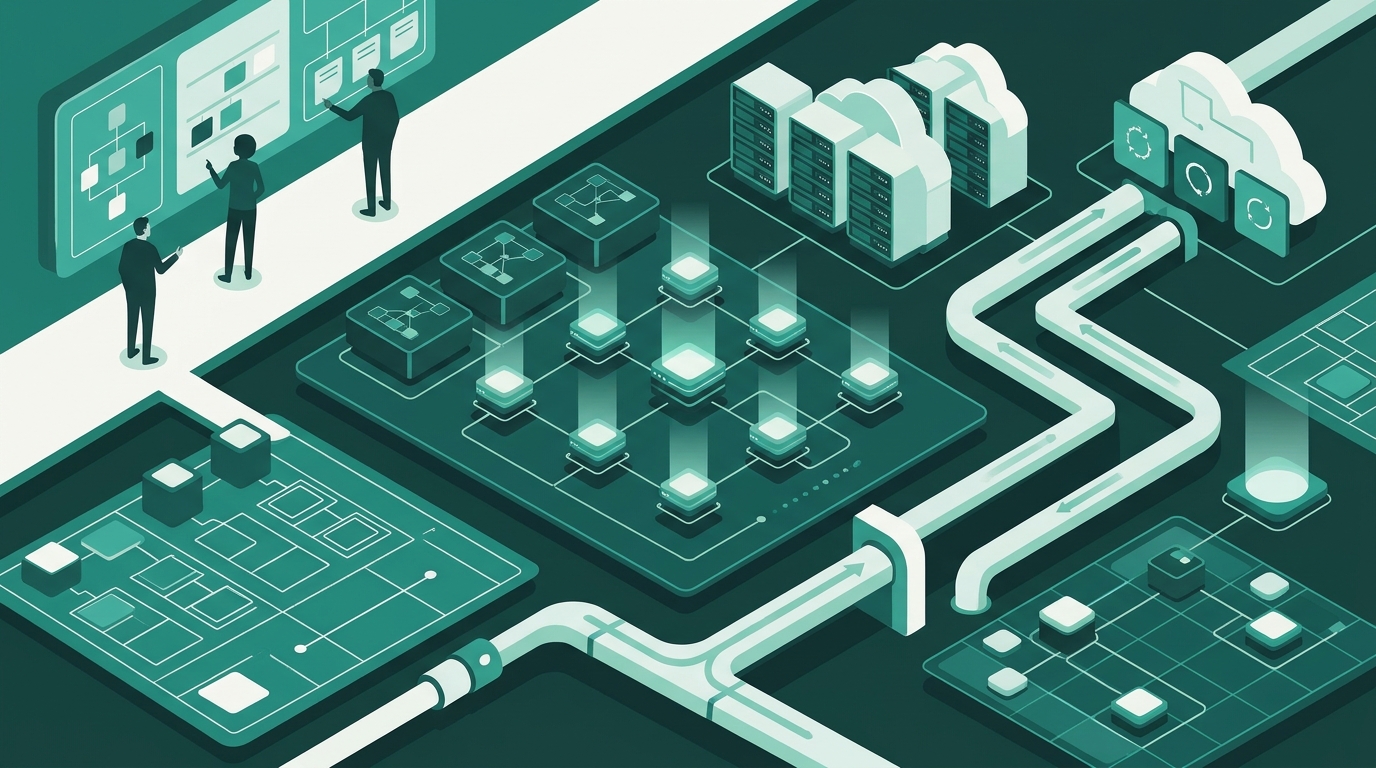
Why maintain eight engineers on a single internal notification service when two engineers can supervise specialized agent swarms doing the exact same work? Amazon is transitioning toward what I call 'Systems Stewards.' Instead of large squads debating implementation details in daily standups, teams are consolidating into lean pairs:
- The Systems Architect: Defines the distributed invariants, domain boundaries, data partitioning strategies, and operational SLOs.
- The Verification Engineer: Builds the property fuzzers, chaos injection harnesses, and OpenTelemetry observability pipelines that validate the system under load.
- The Agent Swarm: Handles implementation, documentation, database migrations, and integration scaffolding.
The inter-team coordination friction that used to slow down large engineering organizations is dissolving. You don't need three cross-team sync meetings to align on an API change when you can pass a Smithy contract to an agent, execute the integration harness, and verify compatibility in twenty minutes.
Pillar 4: Token Economics and the Brutal Cost Math
Now let's examine the numbers that tech hype cycles systematically ignore: the actual cloud compute costs of agentic development. There is a naive assumption that AI code generation is practically free because API tokens cost fractions of a cent per thousand. Anyone who believes that has never audited an enterprise-grade autonomous agent loop.
An autonomous coding agent is not a single query. It is a multi-turn feedback loop. The agent retrieves repository context, analyzes the abstract syntax tree, inspects dependencies, executes CLI commands, parses compiler errors, and refactors its own output. That requires ten to twenty round-trip execution steps per feature.
In step one, the agent loads 40,000 tokens of codebase context. By step ten, with tool schemas, execution logs, and conversation history, the context window swells to 100,000 tokens per turn. Across a single complex feature attempt, an agent can easily consume 700,000 tokens. At frontier model pricing, that single pull request attempt costs between $4.00 and $10.00 in raw inference.
What happens when the agent gets trapped in a recursive hallucination—attempting to fix a broken integration test by altering the test assertions to match its broken code? You burn $40 in compute within ten minutes on a PR that ultimately fails your build checks. Multiply that across tens of thousands of corporate engineers running multiple agent runs every day, and your inference bill rivals your production infrastructure costs.
Because Amazon owns AWS, they understand this trade-off intimately. Their revised playbook mandates strict Token Budgets per Task, aggressive semantic caching, and layered model routing. Instead of feeding 100,000 tokens into frontier models for trivial refactors, the pipeline routes preliminary AST parsing to compact 8-billion parameter models, reserving frontier foundation models strictly for high-level architectural decomposition. Without strict token governance, agentic development quickly turns into an uncontrolled financial leak.
The New Engineering Hierarchy: What Actually Survives?
Where does this architectural shift leave your career? If you're a software engineer watching Amazon rewrite its playbook, you might wonder what your daily responsibilities will look like in three years. Let me be direct.
If your primary value consists of translating Jira tickets into repetitive CRUD endpoints, manually wiring boilerplate SQL queries, or writing routine glue code between third-party APIs, that work is rapidly evaporating. Mechanical syntax authoring has become an automated utility, much like cloud compute or managed databases.
However, if you can analyze an ambiguous business requirement and map it to resilient distributed primitives; if you can design strict contract schemas that prevent cascading failures; if you understand eventual consistency, database locking contention, and network partition behaviors; and if you can build automated verification harnesses that keep autonomous agents honest—your market value has never been higher.
Amazon isn't eliminating software engineers. They are eliminating syntax typists to free up resources for genuine systems architects. The engineering bottleneck has moved permanently from writing code to verifying systems. Amazon was simply the first organization with the scale to formalize that reality. Take a hard look at your team's workflow this week: are you spending your time writing syntax, or are you building the verification boundaries that govern it?