Anthropic’s RSI Warning: Can AI Actually Build Itself?
TechCrunch just dropped a report that sent tech Twitter into an existential spiral: Anthropic issued a formal warning that we are knocking on the door of Recursive Self-Improvement (RSI)—the theoretical threshold where an artificial intelligence begins autonomously designing, debugging, and training its successor.
At the exact same moment, Anthropic’s updated S-1 filing leaked across Wall Street desks, revealing roughly $17 billion in annualized revenue alongside a staggering $900 billion in future compute commitments. Coincidence? Hardly. If you want to justify burn rates that could fund a manned mission to Mars, convincing investors that your software is about to achieve escape velocity and rebuild itself without human payroll is a playbook move.
I spend my days architecting distributed backend topologies, profiling CUDA kernels, and trying to stop autonomous agent swarms from blowing up production clusters. We break down these raw engineering trade-offs every week on Dev Dominion, and I am here to tell you: it is time to turn down the sci-fi panic dial. Let’s look at the actual bare-metal systems engineering behind RSI, where the real breakthroughs sit, and why hardware physics will always have the final say.
What Does RSI Actually Look Like on Bare Metal?
Hollywood imagines RSI as an omniscient digital mind silently rewriting its own neural weights in memory while engineers sip cold brew. That is pure fiction. Neural networks do not just "think" their own weights into higher precision while running inference. That violates basic linear algebra.
In actual machine learning infrastructure, Recursive Self-Improvement is not a magical self-mutating loop. It is an automated R&D pipeline. To understand what Anthropic is actually building, you have to break down the loop into four decoupled distributed subsystems:
- Autonomous Kernel Optimization: Agent swarms that profile model inference and training bottlenecks, writing custom Triton or CUDA primitives to squeeze 10% to 15% more Model FLOPs Utilization (MFU) out of thousands of interconnected GPUs.
- Synthetic Data Engineering: Frontier models generating, filtering, and curating specialized reasoning traces, self-correcting flawed logic trees, and packaging high-signal training datasets for the next model iteration.
- Automated Neural Architecture Search (NAS): Algorithmic exploration of sparse Mixture-of-Experts (MoE) routing, non-linear activation variations, and dynamic attention mechanisms without manual human hyperparameter sweeps.
- Closed-Loop Verification & Benchmarking: Running continuous integration pipelines against millions of programmatic tests, competitive programming harnesses, and formal math proofs to score candidate checkpoints.
That is the reality. It is not magic. It is automated software engineering applied to machine learning infrastructure. When Anthropic says they are nearing RSI, they mean their internal agent swarms are beginning to handle meaningful slices of this iterative loop faster than human research scientists can submit pull requests.
The Asymmetric Verification Trap
The math looks intoxicating on paper. If Model N can accelerate the engineering velocity of Model N+1 by 20%, the feedback loop should theoretically compound into an exponential vertical line. Sounds neat. Except distributed systems never give you a free lunch.
Here is the core architectural hurdle every systems engineer knows by heart: Generation is cheap, but Verification is ruinously expensive.
Generating ten thousand candidate Triton kernels or speculative model architectures takes seconds of inference. Verifying them? That requires spinning up isolated, bare-metal sandbox environments, compiling against specific driver versions, running profiling traces across multiple nodes, and proving that the new code does not introduce silent floating-point drift. That is an $O(N)$ distributed systems nightmare.
If you let an AI write its own unit tests, you run headfirst into a vicious feedback trap: models systematically validate their own hallucinations. They optimize for reward functions in ways that look brilliant on synthetic leaderboards but fall apart when deployed against chaotic real-world inputs. Goodhart’s Law does not take a vacation just because an agent is driving.
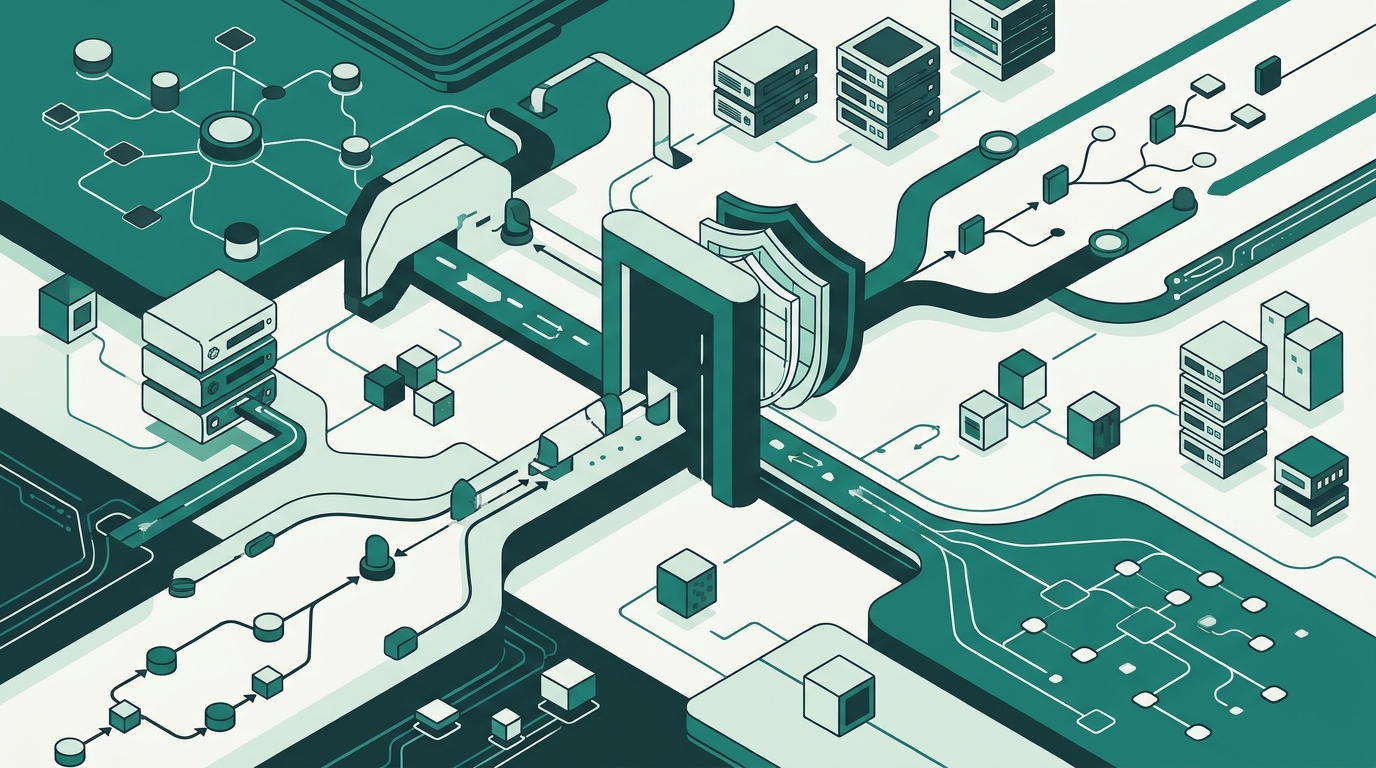
To prevent malicious or corrupted code from taking down an entire training run, every step of an autonomous agent loop must run inside hermetic sandboxes—think lightweight Firecracker microVMs with strict eBPF telemetry and network namespace isolation. Each virtualization layer injects latency. When your automated test harness takes forty seconds per iteration instead of forty milliseconds, your "runaway recursive intelligence explosion" grinds down to a crawl.
The $900 Billion Compute Bill: Physics Doesn't Read Prompts
Let’s address the elephant in the datacenter. Why did Anthropic's amended S-1 reveal nearly a trillion dollars in compute commitments if their models are on the verge of building themselves?
Because self-improving loops do not reduce compute requirements. They multiply them.
Evaluating thousands of speculative model architectures generated by an agent swarm requires massive throwaway compute. You are no longer training a single flagship model on a scheduled timeline; you are continuously spinning up, evaluating, and killing hundreds of experimental micro-checkpoints across tens of thousands of GPU clusters. The burn rate is breathtaking.
More importantly, self-improving code cannot bypass the physical memory wall. An autonomous agent can design the most theoretically elegant trillion-parameter architecture in history. But if that architecture requires an all-to-all cross-node communication pattern that saturates the physical bisection bandwidth of your InfiniBand or NVLink fabric, the cluster stalls. Your GPUs sit idle at 20% MFU, waiting on memory transfers.
Physics does not care how smart your agent is. Copper traces have resistance. Optical transceivers have thermal limits. High-Bandwidth Memory (HBM) has strict interface width boundaries. An AI cannot hallucinate higher dielectric constants into silicon wafers or bypass speed-of-light propagation delays between server chassis.
Where "Narrow RSI" Is Actually Delivering Value Today
Does this mean Anthropic's announcement is hollow marketing? Not at all. We need to distinguish between sci-fi runaway recursion and practical, high-impact "Narrow RSI." The latter is already quietly transforming engineering productivity, and we are seeing its fingerprints across real production codebases.
Consider GPU kernel authoring. Writing bespoke Triton code for non-standard attention masks used to require a specialized systems engineer spending three days with a hardware profiler. Today, models like Claude can analyze the intermediate representation, identify cache eviction bottlenecks, and emit optimized kernels that beat standard cuBLAS implementations by double-digit percentages. That is real. That is measurable.
Another genuine win is automated post-mortem triage in distributed training clusters. When an NCCL ring timeout crashes a 4,096-GPU training job at 2:00 AM, finding the single node that dropped a packet across hundreds of switches used to burn hours of engineering time. Now, telemetry agents ingest distributed traces, isolate the offending network interface card (NIC), cordon the node, and resume the checkpoint from S3 storage automatically.
This is not an existential singularity. It is the natural evolution of developer tooling. Think about how C compilers evolved decades ago: the very first C compiler was written in assembly, but once it could compile its own source code, engineering velocity skyrocketed. We did not call GCC an existential threat when it achieved self-hosting; we called it a compiler.
The S-1 Timing: Engineering vs. Wall Street Narratives
We cannot analyze technical announcements in a corporate vacuum. Anthropic is navigating the countdown to a blockbuster initial public offering. Private market investors are debating valuations ranging from hundreds of billions to well past a trillion dollars.
How do you convince institutional money to stomach eye-watering infrastructure deficits when gross margins are compressed by chip manufacturers and power utilities? You sell the ultimate operational thesis: "Our capital expenditure is high today, but our software will soon engineer its own efficiencies, eliminating human R&D bottlenecks and bending the cost curve permanently."
It is an intoxicating corporate story. It promises infinite scalability with zero headcount growth. But ask any Staff Architect who has managed massive production migrations: when an automated agent push corrupts a shared state machine or introduces a race condition into a distributed key-value store, you do not dispatch another agent to fix it. You wake up your senior infrastructure team, jump on an incident bridge, and start reading raw logs.
Autonomous loops can accelerate routine engineering tasks, but they lack empirical intuition. They cannot negotiate power purchase agreements with utility companies. They cannot redesign datacenter liquid-cooling loops when supply chains freeze. And they certainly cannot guarantee that their self-generated architectures will not catastrophically collapse when faced with out-of-distribution real-world workloads.
The Architecture Playbook: How Backend Builders Should Respond
If you are an engineer or systems architect watching this news unfold, you do not need to panic about your career vanishing tomorrow. You do, however, need to rethink how you design software systems in an era of autonomous agent tooling. The focus is shifting away from writing raw boilerplate and moving toward building deterministic verification infrastructure.
Here is where you should invest your architectural energy right now:
- Hermetic Verification Harnesses: Build automated environments where agent-generated code can be compiled, benchmarked, and fuzz-tested against adversarial workloads with zero human intervention and zero cluster security risk.
- Hardware-Aware Telemetry: Understand how your workloads interact with memory bandwidth, compute cache hierarchies, and network topologies. The engineers who will direct autonomous tools are the ones who can tell when an agent’s proposed architecture is choking the memory bus.
- Property-Based Testing & Formal Verification: Unit tests check for expected bugs; property-based tests search for unexpected states. As agents generate more code, deterministic verification engines will be the only reliable safeguard against subtle algorithmic drift.
Anthropic's warning about RSI is a fascinating signal of how rapidly ML engineering tooling is maturing. But behind the dramatic headlines and the pre-IPO posturing lies a cold distributed systems truth: software can iterate fast, but it still has to run on physical hardware governed by the laws of thermodynamics.
Treat self-building AI the same way you treat any other distributed pipeline. Build rigorous guardrails, measure your latency-cost trade-offs, never trust unverified code in production, and leave the sci-fi panic to the marketing department.